
At Home
Drama/Everyday life, Greece/Germany 2014
Precise portrait of an excluded person - from sadness to bewilderment to pride
Everyday life in global reproductive work: Nadja has been working for many years as a housekeeper for an upper-class Greek couple and their daughter. She is allowed to feel part of the family. When she is diagnosed with a serious illness and the man of the house gets into financial difficulties due to the economic crisis, rifts suddenly open up and Nadja's job is on the line.
The employee tries to hide her precarious situation in these times of social indifference, but the class differences are obvious: better or worse, at home or abroad, with or without health insurance, these are the current pairs of opposites. But Nadja does not want to lose the emotional bond with her family, with whom she has spent so much time...
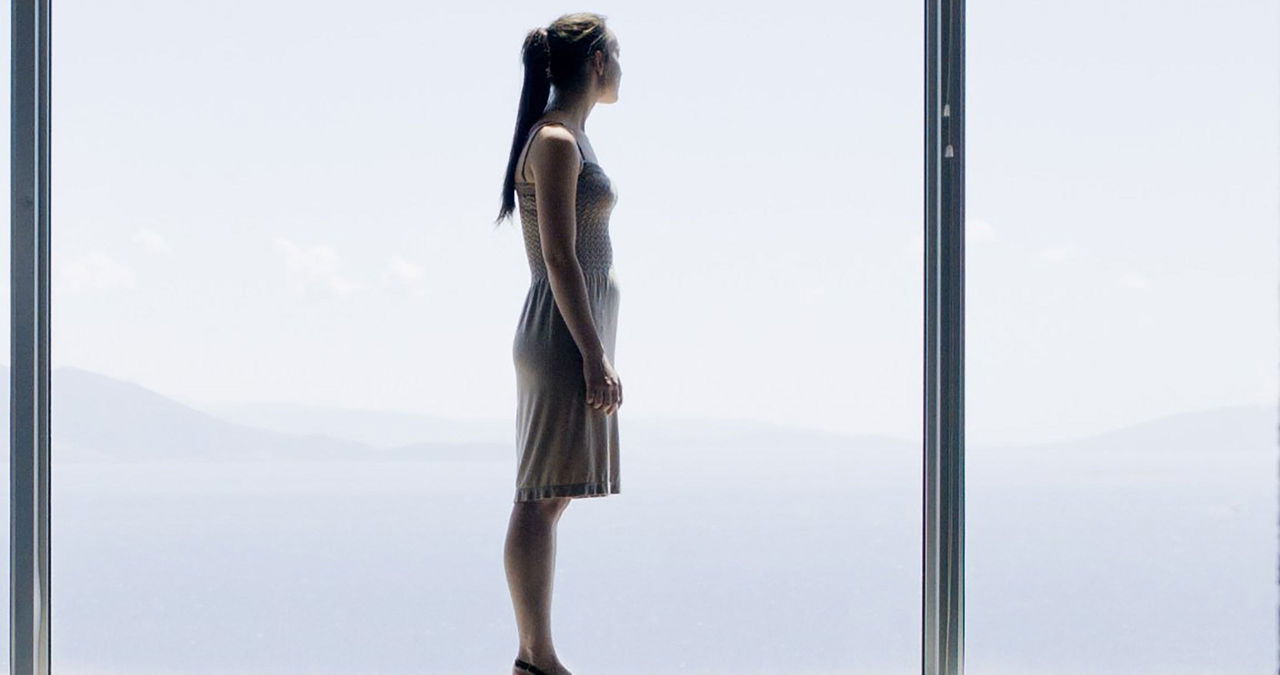
The Greek landscape, which was once the setting for so many myths and legends, is sparse. The camera work in "At Home", with which director Athanasios Karanikolas and cameraman Johannes Louis approach the bungalow of Nadja's employer's family, is also Karg. Like an impregnable fortress, almost entirely made of concrete and glass, the house stands high on a cliff in Marathon, in the heart of Greece. The light remains glaring every day, bleaching out everything. Even the few conversations between the family and Nadja seem washed out and always the same.
The cold rooms are staged in rigid, strictly composed shots that are as restrained as the characters' costumes, which are always monochrome. The change in circumstances comes gradually, almost imperceptibly, and yet is constantly palpable due to the financial difficulties and the threat of dismissal. The result is a drama told at a decelerated pace with complex images, which quietly convinces with its haunting leading actress.
103 min
HD
Starting at 14
Greek
EnglishGerman
Awards
Awards
More information
More information
Director:
Writer:
DOP:
Composer:
Sound Design:
Producer:
Cast:
Maria Kallimani (Nadja)
Alexandros Logothetis (Stefanos)
Marisha Triantafyllidou (Evi)
Zoi Asimaki (Iris)
Yannis Tsortekis (Markos)
Nikos Georgakis (Alexis)
Ieronymos Kaletsanos (Dimitris)
Original title:
Στο Σπίτι
Original language:
Greek
Further titles:
At Home (Sto Spiti)
Sto spiti - Zu Hause
Zuhause
Format:
1:2.35 HD, Colorized
Age rating:
Starting at 14
Audio language:
Greek
Subtitles:
EnglishGerman